

The “Dow is at an all time high” said Pam Bondi in front of congress while deflecting questions about the DOJ’s gross mishandling of the Epstein Investigation.
But this article isn’t about Epstein. It’s actually about the markets. Because Pam Bondi was right, the Dow is at an all time high. But here is why it doesn’t matter. Any why American capital markets may have sucked the soul of Gen Z.
My parents moved here on H1B visas from India. Despite the lack of an engineering degree, they performed well in the valley. They raised me well, put me through college and are on track to retire comfortably. Silicon Valley was the force that put food on the table and clothes on my back.
At the dinner table, my mom often told me that no matter what, I must stay in the Bay Area, because that’s where the opportunity is.
Sorry mom, I disagree. The Technology industry seems markedly different from The Bay Area in 2007 (that’s when they moved here) and I’m not sure it’s for the better.
The hyperscalers have produced immense value, and those who were along for the ride reaped the benefits. My parents began investing in the markets with their employer matched 401k accounts in 2008. One heck of a bull run.
They bought a home in 2014, and locked in their ZIRP era interest rate in 2021. My mom bounced around the semiconductor industry while my dad ran his own software consulting business. They often crib about how their peers have done better than them financially. Failing to recognize that they would have accumulated a fraction of the wealth they now have if they hadn’t gotten on a plane to the Bay Area.
It would be foolish of me to think putting my head down and grinding like they did. Will yield the same results.
Let’s go through a bit of a thought experiment. The average salary of a engineer in the Bay Area is $150k (This is an incredibly random number, there is a ton of variance in the amount of money people make). Rent + Student Loans + Taxes + Keeping up with the Jones’ allows people to save no more than 10% of their gross income. That 150k salary is $8,460 monthly net after deductions, let’s say you save 20% of it or about $1700 a month. Out of the $1,700 lets say you save $700 cash and $1000 in investments.
12k a year invested in an ETF that grows at 8% has the below projected growth scenarios:
After 30 Years: You would have approximately $2,265,664.
After 40 Years: You would have approximately $5,181,130.
After 50 Years: You would have approximately $11,475,403.
That sounds like a lot of money. And it is. But I don’t think it’ll buy the same lifestyle that it bought my parents. The first thing I’d like to note is the above numbers don’t take into account the silent henchman of the American Economy: Inflation. Here are the same numbers adjusted for inflation:
30 Years: ~$673,000 in today’s purchasing power (vs. the $2.2M nominal figure).
40 Years: ~$1,140,000 in today’s purchasing power (vs. the $5.1M nominal figure).
50 Years: ~$1,832,000 in today’s purchasing power (vs. the $11.4M nominal figure).
Pardon my French but that’s kind of a dogshit return compared to our earlier numbers. While inflation is a big problem, the modern technology brother faces other roadblocks to his financially free life in the suburban Bay Area: housing costs.
A day will come where you are sick of your landlord, and you will cough up a 20% down payment on a 2.2 million dollar home in San Mateo county (that’s the median price, you are by no means balling out) and now your investment accounts don’t look so hot. But now, you’re stressed out, because a 1.8 million dollar home means a $13,000 monthly payment. I don’t even want to get into how expensive you kid’s daycare is or the $100 a month you spend on Tesla Autopilot.
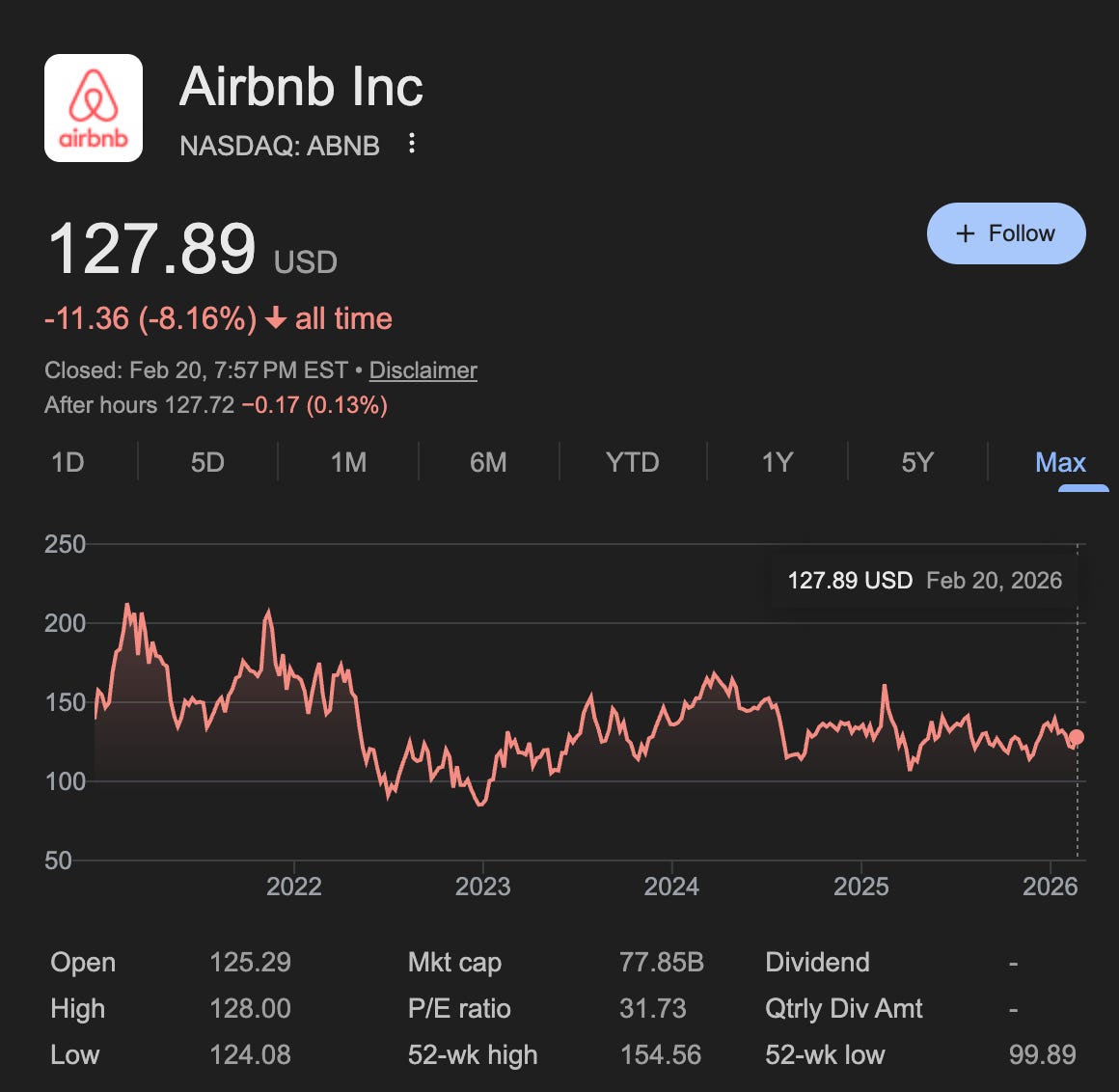
Good thing you got promoted! But wait now that you make 350k the amount of tax you pay on every marginal dollar earned is much larger. Making money now feels like pushing a rock up a hill. And the company you work for, their stock has traded sideways for the last 5 years so your RSU’s are functionally just cash, defenseless against inflation.
We aren’t doomed. We live great lives. The middle class technology brother has a chushy job can take 2 international trips a year, live in a cool apartment, and maybe even buy a large home in the Sacramento metro area. That’s a good life!
The important thing to remember is that the DOW being at an all time is actually pretty bad for young people. We are forced to buy into the market when it’s at it’s peak. Our generation investing in these frothy markets is analogous to buying an overpriced labubu on Ebay. While this isn’t ideal, most people don’t think they have a choice.
The moral of the story is this. If you decide to become a technology brother, make sure you like technology. Because it’s unlikely that the markets are gonna 10x again by the time we’re all ready to buy homes. And if you go into a career with unrealistic expectations, it’s probably gonna suck your soul out.
We are the first generation that isn’t gonna do as well as our parents. And that is probably ok. Because there is a lot more to life than an annualized rate of return.
-raj
Counterpoint as I’ve spent a lot of time thinking about this and decided to go against the “doomer” school of thought.
“If you decide to become a technology brother, make sure you like technology. Because it’s unlikely that the markets are gonna 10x again by the time we’re all ready to buy homes.”
We’re arguably in the middle of the 4th Industrial Revolution (4IR). Like the ones before it, the engineers entering the field right now are exactly the people positioned to capture the most value from that shift. Telling someone to avoid tech for wealth reasons in 2026 feels a lot like telling someone that steam and coal power wouldn’t create value.
Rising home prices are a housing supply problem, not a tech problem, and tech is still probably your best shot at affording one. More importantly though, I think the framing of property as the wealth vehicle is worth questioning altogether. Your parents’ path was essentially: get in early on a transformative technology wave, let it compound over 30 years through a 401k. That mechanism isn’t dead. It just looks different now. Buying public equity in foundation model companies as they IPO might be the analog for our generation that your parents’ 401k was for theirs. They didn’t invent the internet, they just had the sense to be in the room. The question is whether we recognize that AI might be that same room; and if so, a career in tech is still probably the best seat in the house.
banger